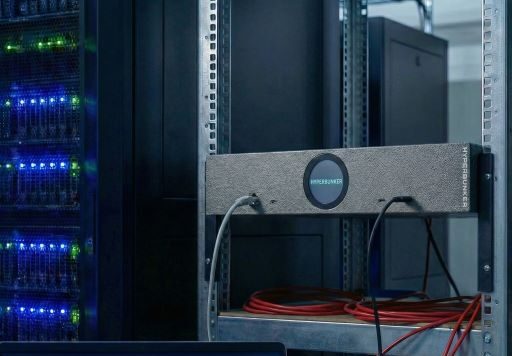
HyperBUNKER is built on a simple idea: in a world obsessed with software and clouds, cybersecurity still needs something brutally real, a physical last line of defense when everything else fails. While most solutions focus on firewalls, EDR, snapshots and cloud backups, HyperBUNKER exists for the moment when those layers are breached, encrypted, misconfigured or simply unavailable.
Why traditional cybersecurity devices are not enough
Most organizations already own a zoo of cybersecurity devices:
- Firewalls, WAFs and IDS/IPS appliances that inspect and filter traffic
- Endpoint protection and EDR agents on servers and workstations
- Network access controls, VPNs and Zero Trust gateways
- Backup appliances and cloud backup gateways
All of these are valuable, but they share two big weaknesses:
- They live in the same logical universe as the systems they protect, the same network, the same identity fabric, often the same cloud.
- They assume that when something goes wrong, you can still reach your backups, your control plane and your management tools.
Modern attacks are designed to break those assumptions. Ransomware operators now target backups first, compromise admin accounts, wipe hypervisors, and even deliberately corrupt snapshots. Misconfigurations, insider threats or plain human error can have the same effect: you think you are protected, until you need to recover and discover that your “safety net” is gone.
That’s exactly the gap HyperBUNKER is built to fill.
HyperBUNKER: not another backup, but the last line of defense
HyperBUNKER is not here to replace your existing backup or cybersecurity stack. It is designed to sit underneath it as a physically and logically separate safety vault. Think of it as the “break glass in case of emergency” layer for your most critical data and systems, but engineered, tested and maintained as a permanent part of your cybersecurity architecture, not as a desperate afterthought.
What makes this approach different and worth using even if you already have other backup solutions:
- Physical separation and hardening
Your regular backup appliance or cloud bucket is usually reachable over the network and managed with the same credentials and tools as everything else. That’s convenient and exactly why attackers love it.
HyperBUNKER is designed as a physically hardened environment with tightly controlled access and isolation. Even if your production environment, identity provider and backup infrastructure are compromised, the data stored in HyperBUNKER remains out of reach of normal attack paths. - Logical isolation from your daily chaos
Day‑to‑day operations inevitably introduce risk: new services, test environments, temporary firewall rules, rushed changes. Traditional backup and security devices are constantly touched by these changes.
HyperBUNKER is engineered to be deliberately boring in that sense: highly controlled, minimal change, strict processes. It does not follow every trend or convenience; it exists to be predictable and reliable when everything else is noisy and dynamic. That mindset is a core part of resilient cybersecurity. - Designed for survival, not convenience
Many backup solutions are optimized for fast daily restores of single files or VMs, quick dev/test clones, or easy self‑service. That’s great for productivity but those same conveniences can introduce attack and misconfiguration paths.
HyperBUNKER is optimized for the worst day in your company’s history:- A full production wipeout
- A mass ransomware event
- A major cloud or data center failure
On that day you don’t need “nice UX”; you need guaranteed integrity, a clean copy, and a deterministic way to rebuild. HyperBUNKER is built around that worst‑case mentality.
- Coexistence with your existing tools
Because HyperBUNKER is not “yet another backup product”, it does not force you to abandon your current snapshot, replication or cloud backup strategy. Instead, it complements them:- You continue to use your existing backup devices for everyday restores and routine incidents.
- HyperBUNKER holds the truly critical data and system images you must never lose, protected by stronger isolation and procedures.
This layered approach aligns with mature cybersecurity thinking: multiple independent controls, not a single point of failure.
Why a last line of defense matters now
Attackers have learned to chain vulnerabilities, abuse identities and leverage automation in ways that bypass traditional device‑centric thinking. A world where you “just restore from backup” is gone. The question is no longer “Do we have backups?” but “Can an attacker or an admin mistake destroy all of them in the same event?”.
By adding HyperBUNKER under your existing stack, you:
- Reduce the chance that a single breach takes out both production and backups.
- Gain a recovery anchor that lives outside your everyday operational blast radius.
- Turn your cybersecurity story from “we hope nothing catastrophic happens” into “we are prepared even if it does.”
In other words, if your current cybersecurity devices are the alarm systems, cameras and locks, HyperBUNKER is the vault in the reinforced basement. You still need the alarms and cameras, but when everything else fails, you want to know that somewhere, in a hardened place, the data that matters most is still intact and waiting to bring your business back to life.
Request a HyperBUNKER demo – get@hyperbunker.com
Author: Denis Eskic CISO, HyperBUNKER